
Last updated November 22, 2026
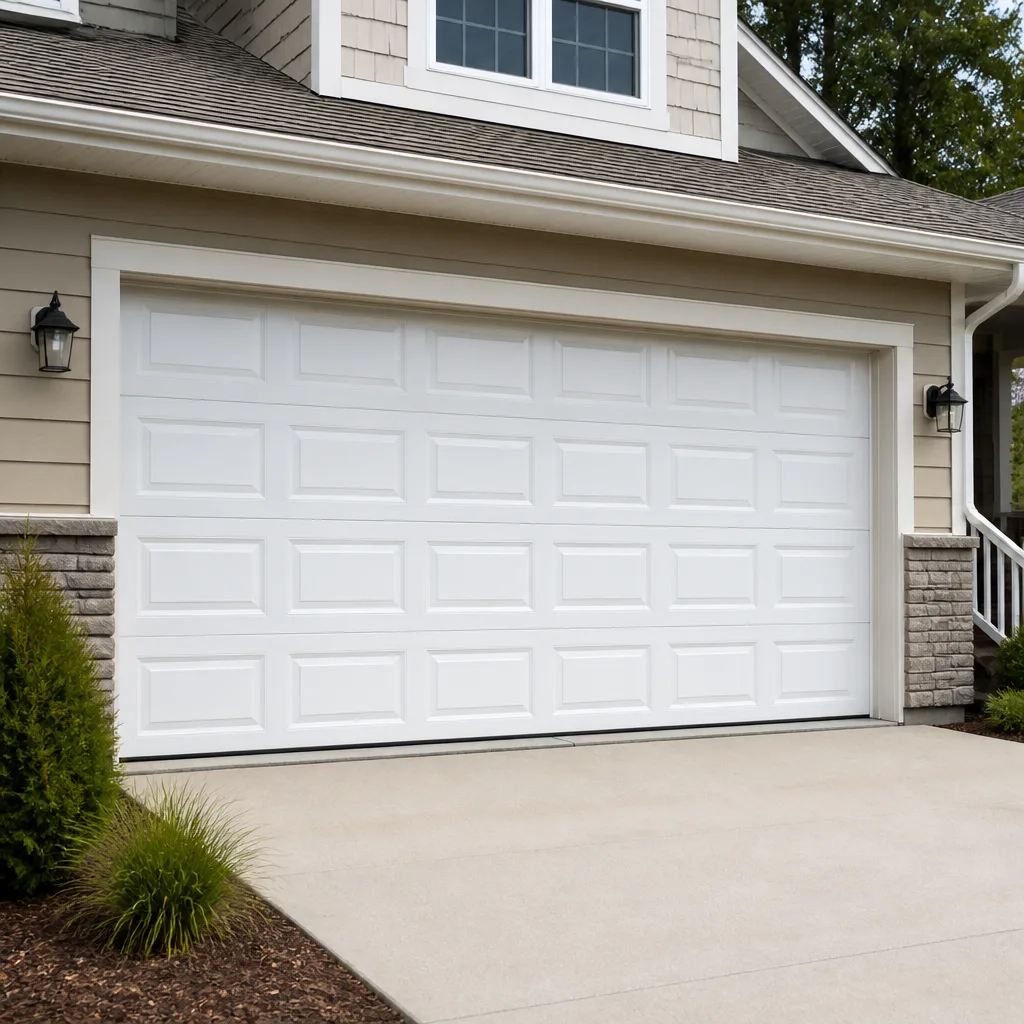 Raised-panel steel
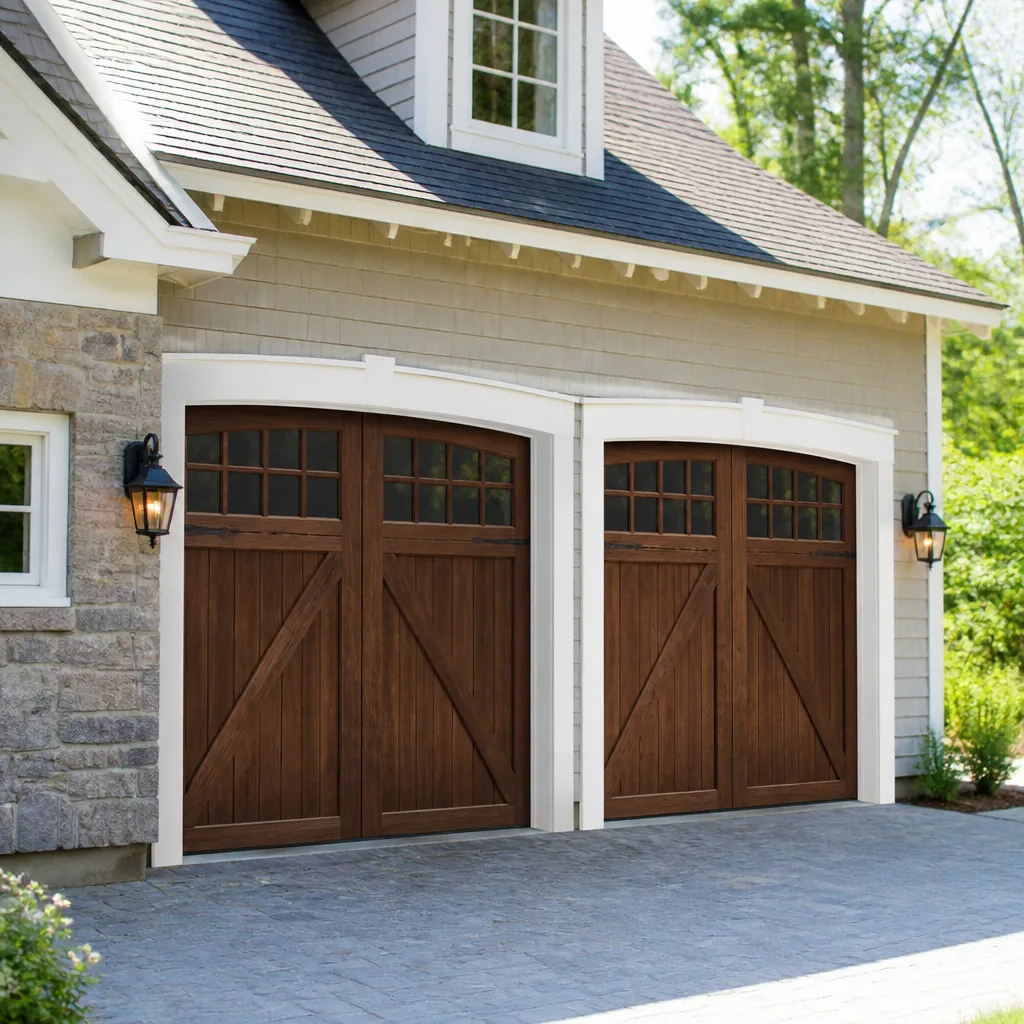 Carriage house
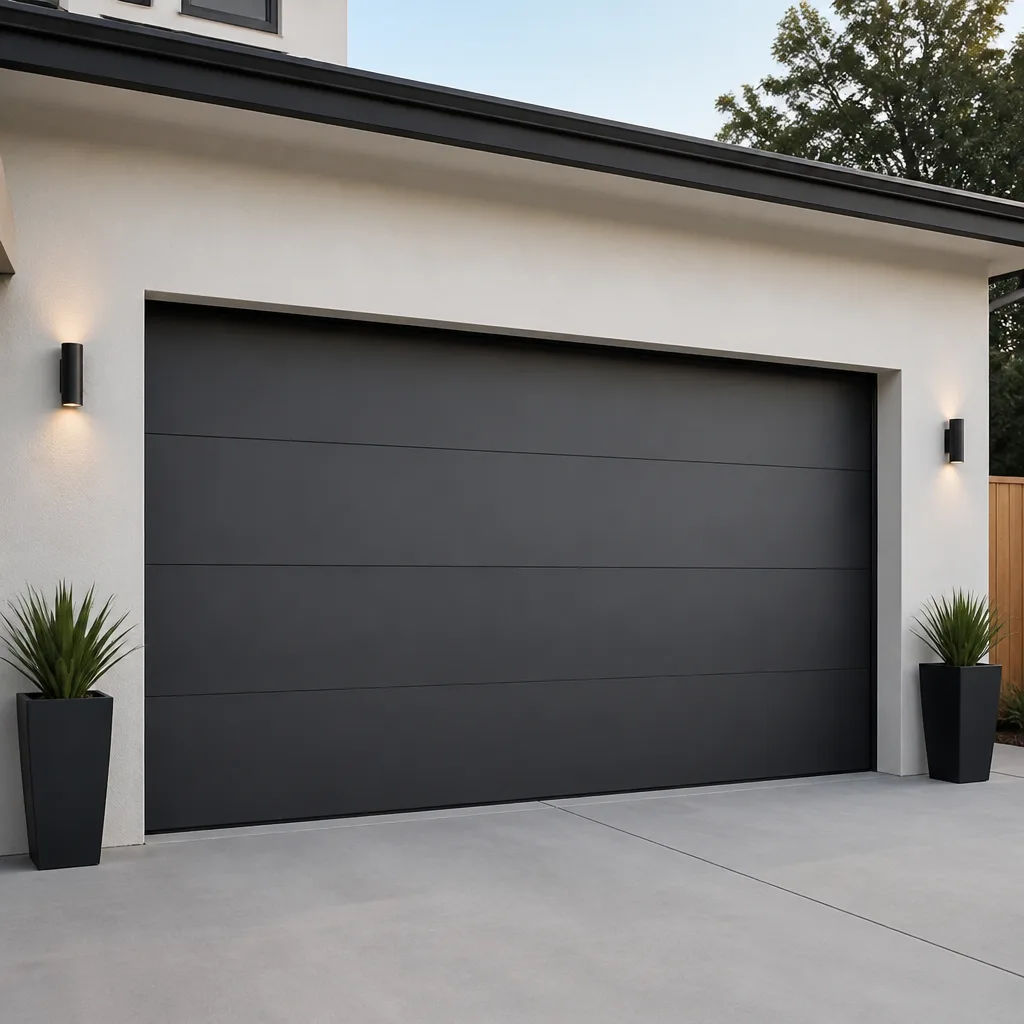 Modern flush
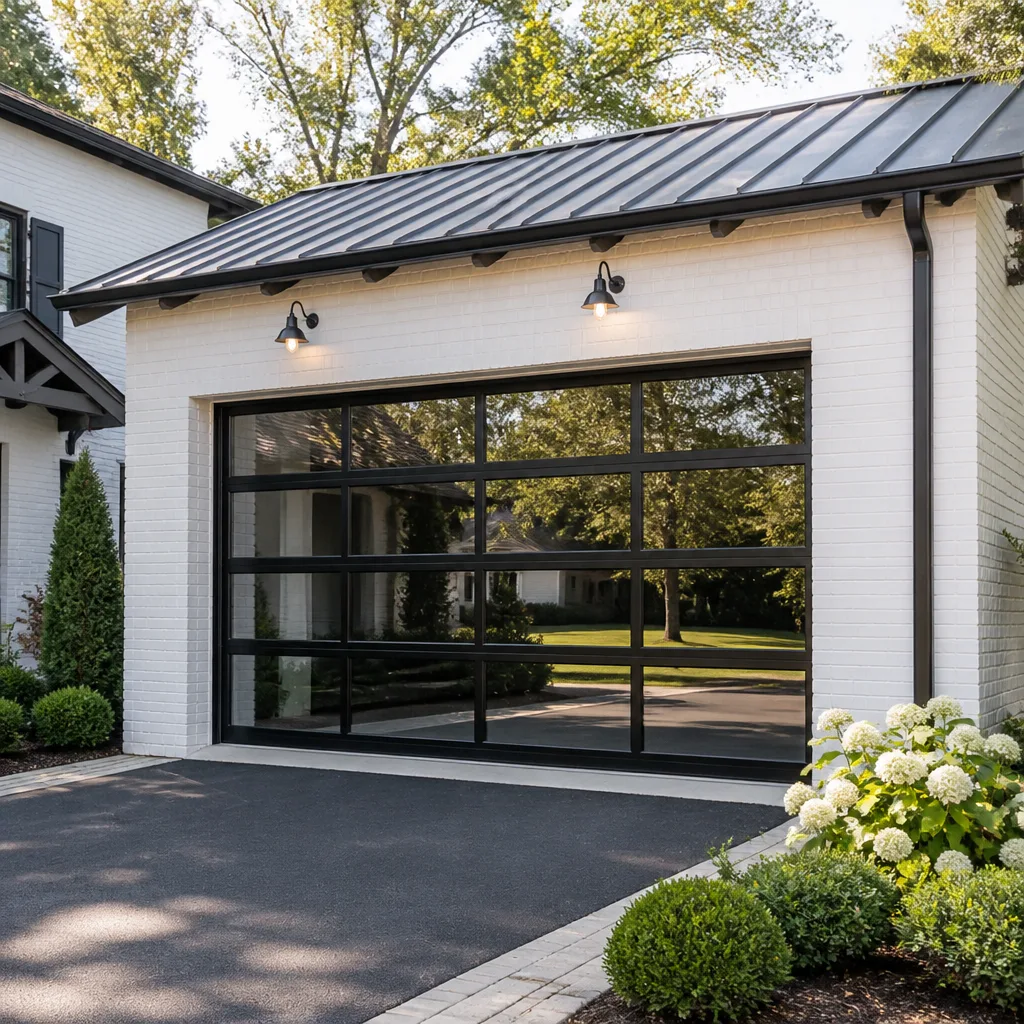 Full-view glass
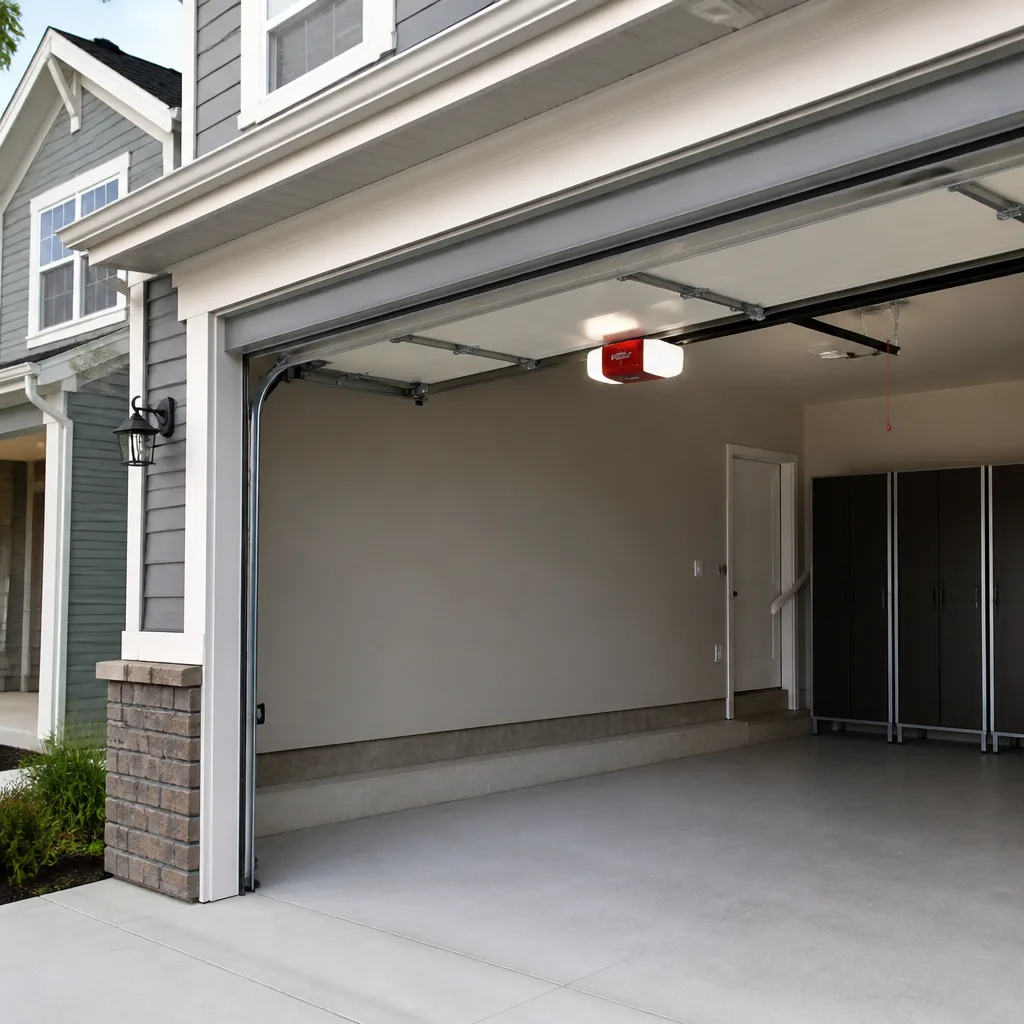 LiftMaster openers
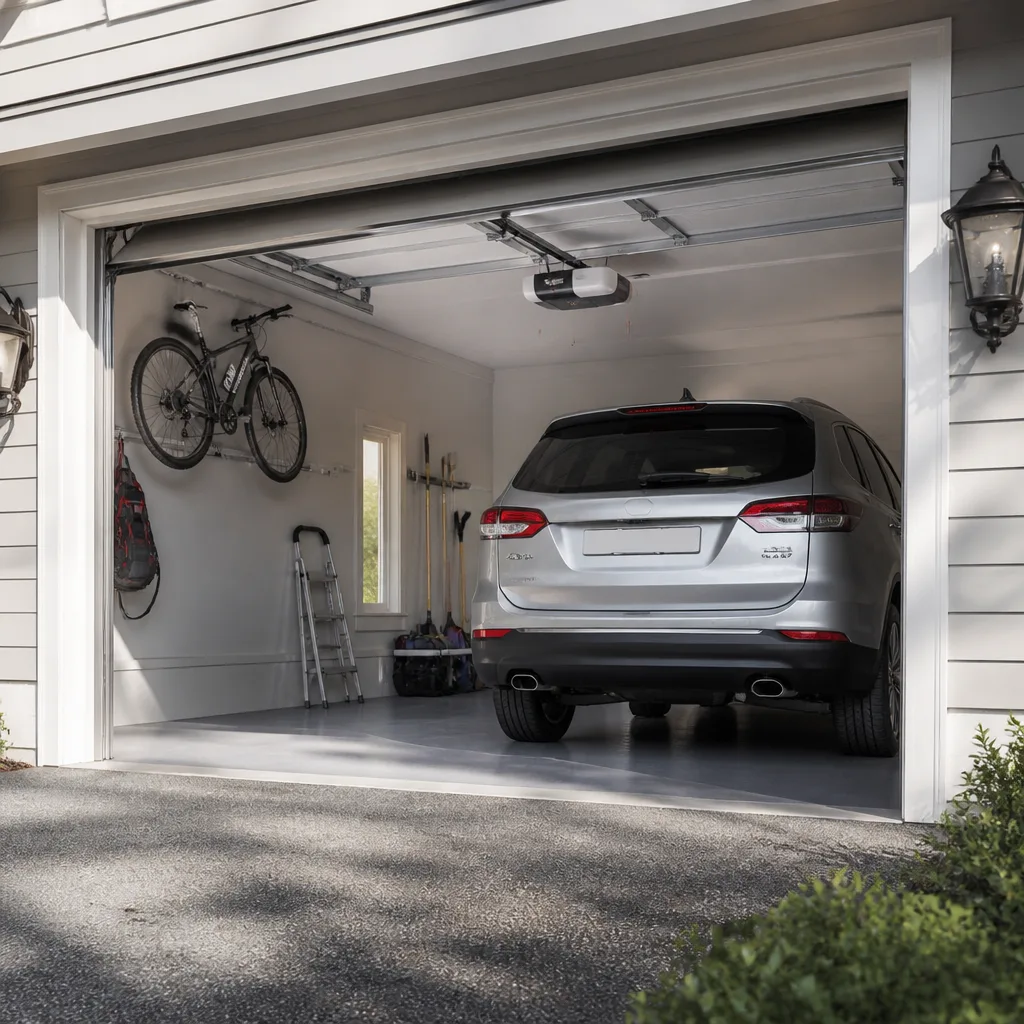 Chamberlain openers
Full 25-point door and opener safety check with every visit - springs, cables, rollers, tracks, and your LiftMaster or Chamberlain opener included
You get a price before we start. It does not change when the pro arrives.
Get your free estimateGarage Door Warning Signs: A Bethlehem Homeowner’s Reference Guide
A garage door that’s slightly slower than it used to be isn’t “just getting old.” It’s one of the clearest early indicators that your spring tension is off, and an unbalanced door puts enough stress on the opener to wear out the motor within weeks rather than years. That slowdown you’ve been meaning to look into is telling you something specific. This guide teaches you to read it. You’ll learn what each sound means at each point in the door’s travel, how to spot asymmetry before it becomes a drop, how to baseline a healthy door while it’s still healthy, and which warnings demand a call today versus a scheduled visit. Written from Bethlehem, for the doors and seasons we actually live with.
Quick Answer
The most serious garage door warning signs in Bethlehem are a door that reverses before it touches the floor, a snapped spring (you’ll hear a bang and the door won’t lift), visible cable fraying, a door that hangs crooked in the opening, and grinding or popping that repeats at the same spot on every cycle. Those are same-day calls. Squealing at the rollers, a slow-to-respond opener, and minor rattling can usually wait for a scheduled appointment within two weeks. If you’re unsure which bucket a symptom falls into, call (833) 468-5855. We answer 24/7. Fast dispatch from 7am to 7pm, Sunday through Friday.
Styles & brands we work with
- Raised-panel steel
- Carriage house
- Modern flush
- Full-view glass
- LiftMaster openers
- Chamberlain openers
Table of Contents
- Why Your Door Is Already Talking to You
- Sound-Based Diagnosis: What Each Noise Means
- The Visual Check: Asymmetry, Cables, and Gaps
- The Speed and Smoothness Test
- Same-Day Emergencies vs. Scheduled Visits
- How Warning Signs Differ for Older and Newer Doors
- What Bethlehem Homeowners Should Know About Local Doors
- Common Mistakes to Avoid
Why Your Door Is Already Talking to You
Garage doors fail in sequence, not all at once. The hardware gives you days to weeks of notice, and almost nobody is listening. Most homeowners only call once the door is fully stuck or hanging off a track, which is exactly when the repair is at its most involved and the risk to anyone standing underneath is highest. We’ve walked Bethlehem homeowners through hundreds of these calls, and the pattern holds: the door warned them first, and the warning was framed as normal.
A garage door is four systems working together. The springs carry the weight, the cables hold the tension in check, the tracks steer the panels, and the opener supplies the push. When one drifts out of balance, the other three compensate, and compensation is what you hear and see. A bent track shows up as a squeal. A slack cable shows up as a crooked panel. A weakening spring shows up as a slow door. None of these announce themselves with a bang first.
Learning to read those signals is the whole point of this reference. It doesn’t turn you into a technician, and it shouldn’t. Springs and cables are under extreme tension, and adjusting either by hand is how serious injuries happen. What you can do is notice, record, and describe. That’s enough to let a trained technician diagnose accurately over the phone and arrive with the right parts.
Key takeaways:
- Doors communicate through sound, speed, and alignment before they fail.
- Every symptom belongs in one of two buckets: same-day or scheduled within two weeks.
- Never touch springs or cables yourself; observation is the homeowner’s job.
Sound-Based Diagnosis: What Each Noise Means
Grinding usually means metal-on-metal contact in the tracks or hinges. Squealing points to dry or worn rollers. A single loud pop followed by a door that won’t lift is a broken spring. Repeating rattling suggests loose hardware somewhere along the panel hinges. Where the sound happens during the door’s travel matters as much as the sound itself.
Walk outside while the door cycles and listen from a few feet away. Here’s how the four most common sounds map to actual components:
Grinding
Grinding is metal fighting metal. It most often comes from a track that has been knocked slightly out of alignment, so the rollers scrape the rail instead of rolling through it. A loose section joint or a bent hinge can produce the same noise. Grinding that stops after a couple of feet isn’t a break-in issue, it’s an alignment issue, and it tends to get worse quickly because the scrape keeps widening the gap.
Squealing
Squealing is friction without contact damage yet: dry rollers, dry hinges, or weatherstripping dragging on the frame. This is the most forgiving sound on the list. It’s also the one where a scheduled visit works fine, because nothing is under abnormal load. Left alone for months, though, a squealing roller wears flat, and a flat roller starts thumping.
Popping
A single sharp pop at the start of travel is the classic sound of a torsion spring snapping. The door will feel impossibly heavy, or may not move at all. This is a same-day call and not something to test repeatedly by pressing the opener button.
Rattling
Rattling is loose hardware: bolts backing out of hinges, a bracket that’s worked free, a panel fastener that’s given up. It’s rarely urgent on its own, but it’s a reliable early indicator that the door is vibrating more than it should, and vibration is what loosens the next bolt.
Where in the travel it happens:
- Noise in the first six inches of lift: spring or cable tension.
- Noise at eye level and above: track alignment or roller wear.
- Noise near the close position only: bottom seal, bottom bracket, or threshold contact.
- Noise the entire cycle: opener motor, gear, or a badly dry roller set.
If you’re hearing any of these and want it looked at, the fastest route to a diagnosis is a garage door repair visit. A technician can tell you within minutes which of the four systems is responsible. Call (833) 468-5855.
The Visual Check: Asymmetry, Cables, and Gaps
A crooked door is a symptom, not a cosmetic problem. If one side of the door sits lower than the other, or the gap between a panel and the track widens at the top, the door is out of balance and the components holding it are under uneven load. Asymmetry is the most reliable visual warning sign there is.
Run this check on a door that’s fully closed, with the opener disconnected if you can safely reach the release with the door down. Keep your hands away from springs, cables, and brackets throughout.
- Look at the horizontal gap at the floor. The door should meet the floor evenly. A visible gap on one side only points to a stretched cable or a torsion setup that’s lost equal tension.
- Check the vertical gap at each side track. Measure with your eye from several feet back. If one side shows more daylight than the other, the track has shifted or a roller has come out of the rail.
- Inspect the cables without touching them. Look for frayed strands, kinks, or a cable sitting loose rather than taut. Frayed cables are a same-day issue because a cable that fails under load lets the door drop.
- Scan the panels for cracks or separation. A panel that has pulled slightly away from its hinge affects the whole door’s rigidity. Clopay and Amarr panels are built to flex a little, but they shouldn’t separate.
- Look at the brackets for fresh rust streaks. Rust blooming at a bracket joint often means moisture is sitting where it shouldn’t, and Bethlehem’s freeze-thaw cycles push that moisture deeper each spring.
Any crooked door, any frayed cable, any panel that’s visibly separating: stop using the opener and book a technician. We work on the full range of panel systems, including Wayne Dalton and Craftsman doors, so there’s no dead end on brand. Call (833) 468-5855.
The Speed and Smoothness Test
A healthy garage door travels at a consistent speed from start to finish, with no lurch, no pause, and no audible strain at any point. Establish that baseline now, while your door is well, so you have something to compare against later. Ten seconds of observation today saves a frantic call later.
Here’s how to build a baseline in about two minutes:
- Stand back far enough to see the whole door and open it fully.
- Count the seconds out loud from the moment it starts moving to the moment it stops.
- Repeat with the close cycle.
- Write both numbers down, along with the month, somewhere you’ll find it again.
- Repeat the test once a season and compare.
What a consistent travel time tells you is that the spring tension and the opener’s force settings are still matched to each other. What a changing travel time tells you is that one of them has moved. A door that’s gotten a second or two slower on the way up is typically a spring losing tension. A door that moves smoothly up but hesitates or surges on the way down is usually a force-setting or sensor issue, and that one is best handled by a garage door opener repair visit rather than an adjustment of your own.
Lurching matters as much as speed. A door that moves in visible jerks, or that stalls at the same point on every cycle, is binding. Binding concentrates load on one side, and a door that binds for long enough ends up dropping a cable or cracking a panel. If the door is binding, stop running it and get it looked at.
Also listen for strain at the very start. A door that struggles for the first foot and then travels normally is fighting its own spring balance. The opener is doing work the spring should be doing, which is precisely how motors get overheated and worn out.
Same-Day Emergencies vs. Scheduled Visits
Same-day attention belongs to anything that could drop, crush, or lock you out of your home. Anything that’s purely about wear and noise, with the door still moving evenly and safely, can go on the schedule within two weeks. Sorting a symptom into the right bucket is the single most useful judgment call in this guide.
Same-day: call now
- A snapped spring. You’ll hear it and the door won’t lift under opener power. Don’t keep pressing the button.
- A door that reverses before touching the floor. The safety reverse is misfiring, and that’s a safety failure, not a nuisance.
- Visible cable fraying or a cable hanging loose. A failing cable can let the door fall.
- A crooked or off-track door. Stop using it and call. Running it can drop a panel.
- A door stuck open. Your home is wide open to the street and the weather. In Bethlehem, that’s not a situation to leave overnight.
- Grinding or popping at the same spot every cycle. Something is actively wearing or has already failed.
Scheduled within two weeks: book it
- Squealing at the rollers or hinges. Wear, not failure.
- Intermittent rattling. Loose hardware that hasn’t affected travel yet.
- A slow opener response. Usually an opener-side issue rather than a structural one.
- A minor cosmetic panel dent. Not a safety concern unless the panel has separated.
- A door that’s noisy but even and consistent. Tune-up territory.
When in doubt, call and describe what you’re seeing. If it turns out to be routine, you’ll get booked into a normal slot. If it needs same-day service, we’ll tell you. Call (833) 468-5855. We answer 24/7. Fast dispatch from 7am to 7pm, Sunday through Friday.
How Warning Signs Differ for Older and Newer Doors
A door that’s 10 or more years old tends to fail gradually, giving you weeks of warning across multiple components at once. A newer door that was installed improperly can show serious signs within the first year, and it often fails on one specific component rather than wearing evenly. The symptoms look similar, but the timing and the pattern tell you which situation you’re in.
On an older door, expect the warnings to come in clusters. The rollers go dry, the springs have cycled through years of cold Bethlehem winters, the track has collected small shifts, and the opener is on its second decade of work. When several of these overlap, a full tune-up makes more sense than chasing each symptom one at a time. That’s also the point where we sometimes have a replacement conversation, because a door with multiple failing systems can cost more to keep repairing than to replace. Either way, you won’t need a second company: garage door installation is in the same scope as the repair work, so the conversation stays with one trade.
On a newer door, a cluster of warnings is a stronger signal, not a weaker one. A door installed with the wrong spring for its weight, or with a track that wasn’t leveled properly, will show binding, uneven gaps, or premature roller wear long before a comparable older door would. If your newer door is already squealing, binding, or hanging unevenly, don’t write it off as settling. Have it checked, because correcting the installation early is much simpler than correcting the damage it causes over several years.
Opener age also matters independently of door age. A 15-year-old opener paired with a new door, or a new opener paired with an old door, is a mismatch that tends to surface as force-setting problems and inconsistent travel. If your opener is the older half of the pair, that’s worth flagging when you book.
What Bethlehem Homeowners Should Know About Local Doors
Bethlehem’s climate is hard on garage door hardware in a way that a milder region simply isn’t. Summers bring humidity that swells wooden framing and dulls metal lubrication. Winters bring freeze-thaw cycles that work moisture into bracket joints and rail fasteners and then expand it overnight. The result is that Bethlehem doors tend to age at the joins and fittings before the panels themselves show wear, which is why the visual check in this guide matters so much locally.
Housing stock matters too. Many older homes in Bethlehem have tighter garages where the door’s travel is close to the ceiling framing, so a track that shifts by even a fraction can cause scraping that would go unnoticed in a newer, more generous garage. Doors on South Side and downtown blocks often face the street directly, which makes a door stuck open more of an exposure than it would be on a deep suburban lot. On the north side and out toward the township, garages are frequently attached to living space, so a door that fails to seal properly lets cold air and moisture into the house itself.
Panel and hardware brands vary block to block here as well. You’ll find Clopay and Amarr doors throughout the newer builds, and plenty of older Wayne Dalton and Craftsman installations still running original hardware. We work on all of them, along with LiftMaster, Chamberlain, Genie, and Raynor equipment, so you won’t get a “we don’t service that brand” answer. Garage doors are all we do, and that means the specific failure patterns of a Bethlehem winter are the ones our technicians see most.
Seasonally, the best time to look closely at your door is early fall, before the first hard freeze, and again in early spring once the ground has thawed. Those two checks catch most of what winter does to a door. If you’d rather have a trained eye on it, Bethlehem Garage Door Repair Pros offers free estimates across Bethlehem. Call (833) 468-5855.
Common Mistakes to Avoid
- Treating a slower door as normal aging. Slowing is a tension signal, not a calendar one. A door that’s lost tension will wear out its opener within weeks of the change, not months.
- Repeatedly pressing the opener on a door that won’t lift. If the spring has failed, the opener is straining against a load it was never designed to carry. Stop and call.
- Adjusting springs or cables yourself. Torsion springs and cables hold enough force to cause serious injury. Springs are dangerous. Leave them to a trained technician.
- Spraying lubricant on a grinding track and calling it fixed. Lubricant quiets the sound and hides the alignment problem. The metal keeps wearing where you can’t hear it.
- Ignoring frayed cables because the door still opens. A frayed cable is a cable that has already begun to fail. The door opening smoothly today says nothing about tomorrow.
- Skipping the seasonal check because Bethlehem winters are familiar. Familiar weather still does the same thing to metal and fasteners. The freeze-thaw cycle doesn’t get gentler with experience.
- Hiring a general handyman for a spring or track problem. A garage door is a counterbalanced mechanical system with specific load requirements. It’s worth having a garage door repair specialist in Bethlehem look at it rather than a generalist who splits time across every trade.
See the difference
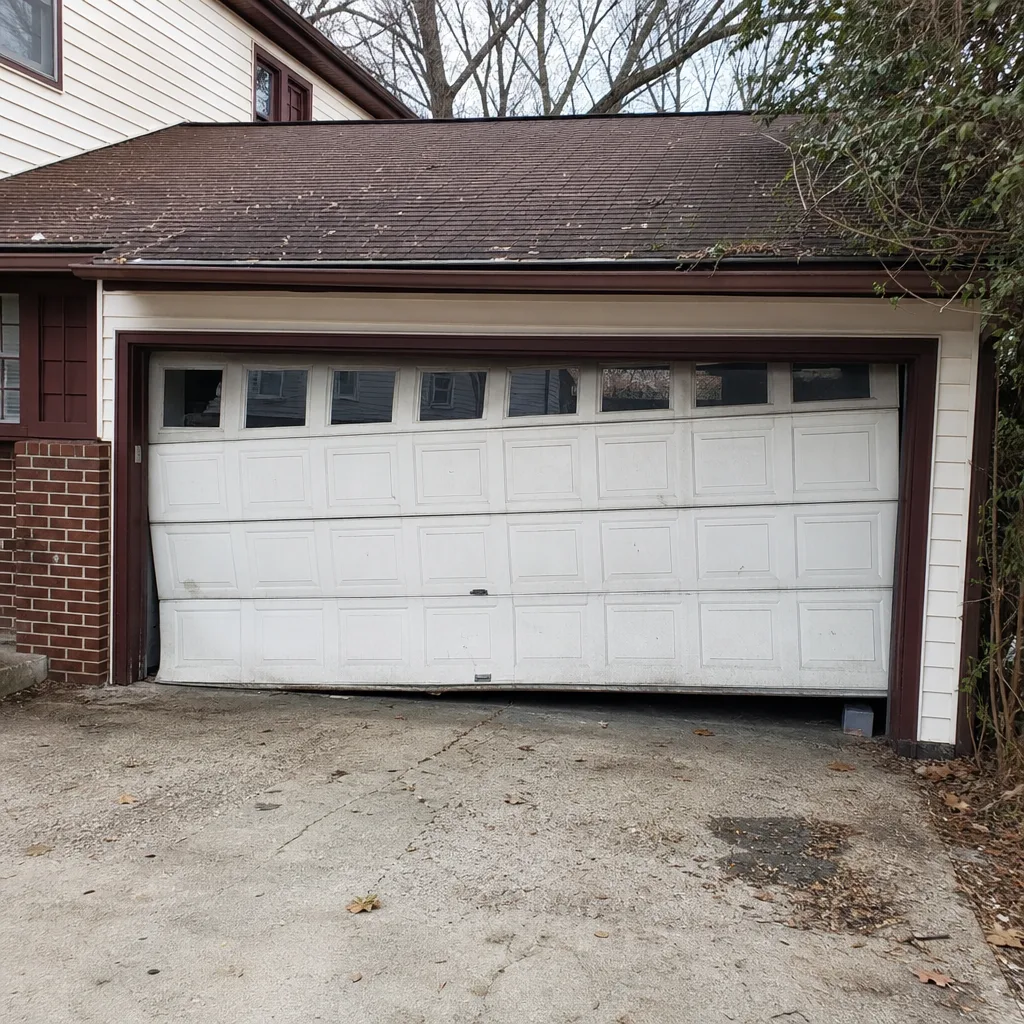 Before
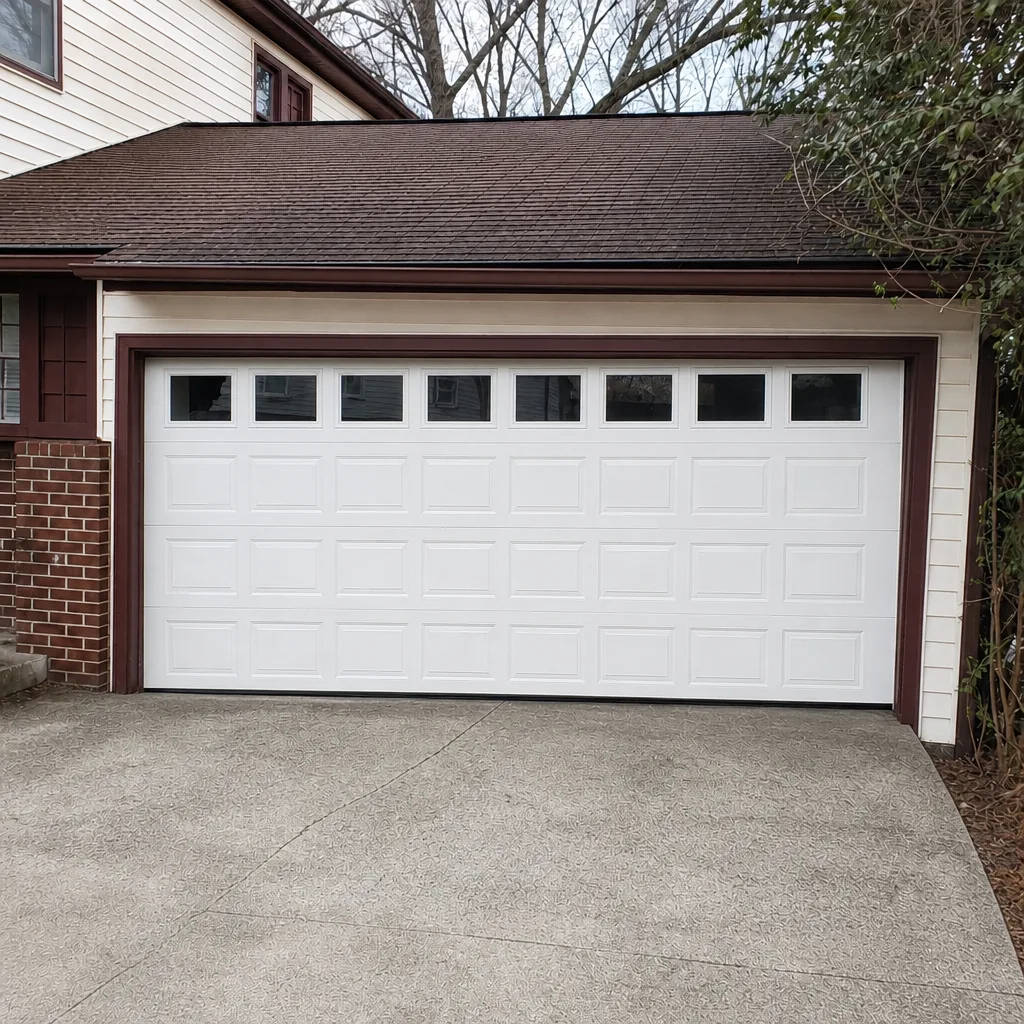 After
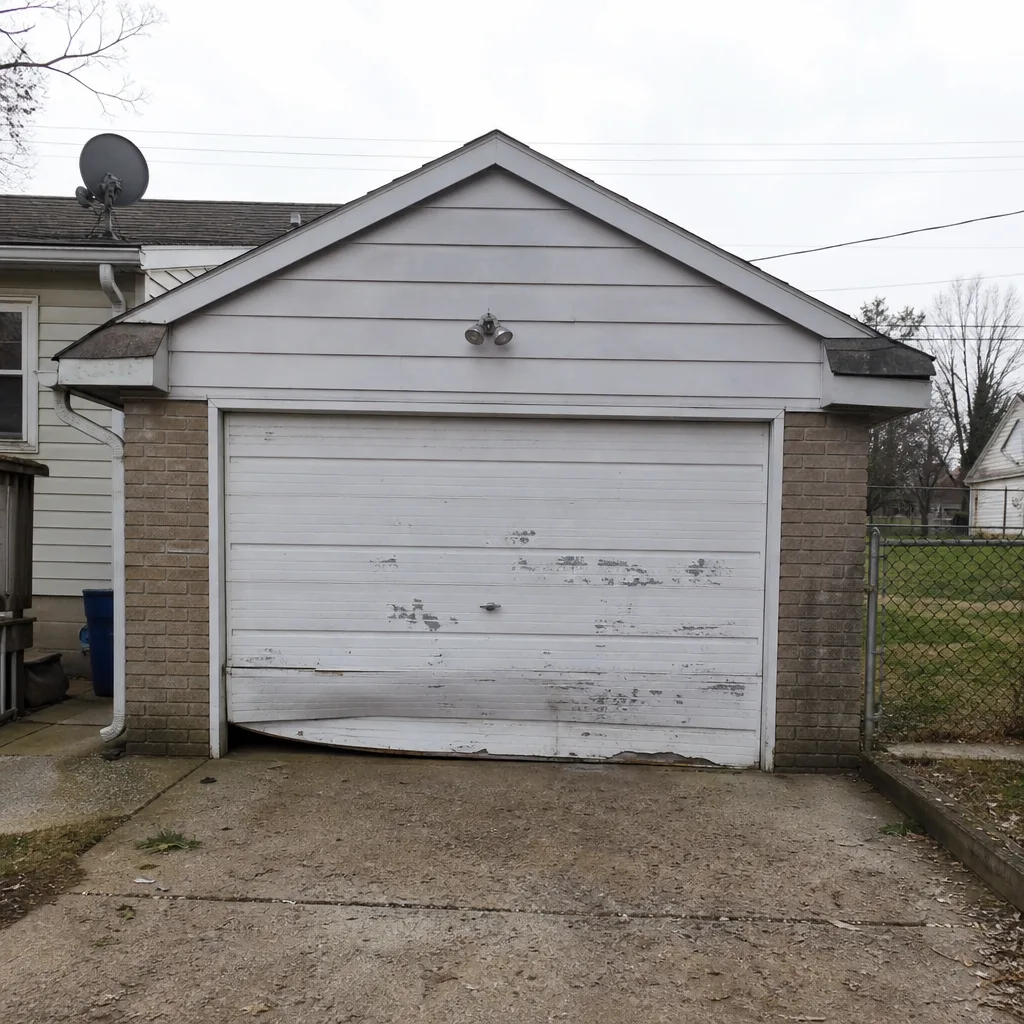 Before
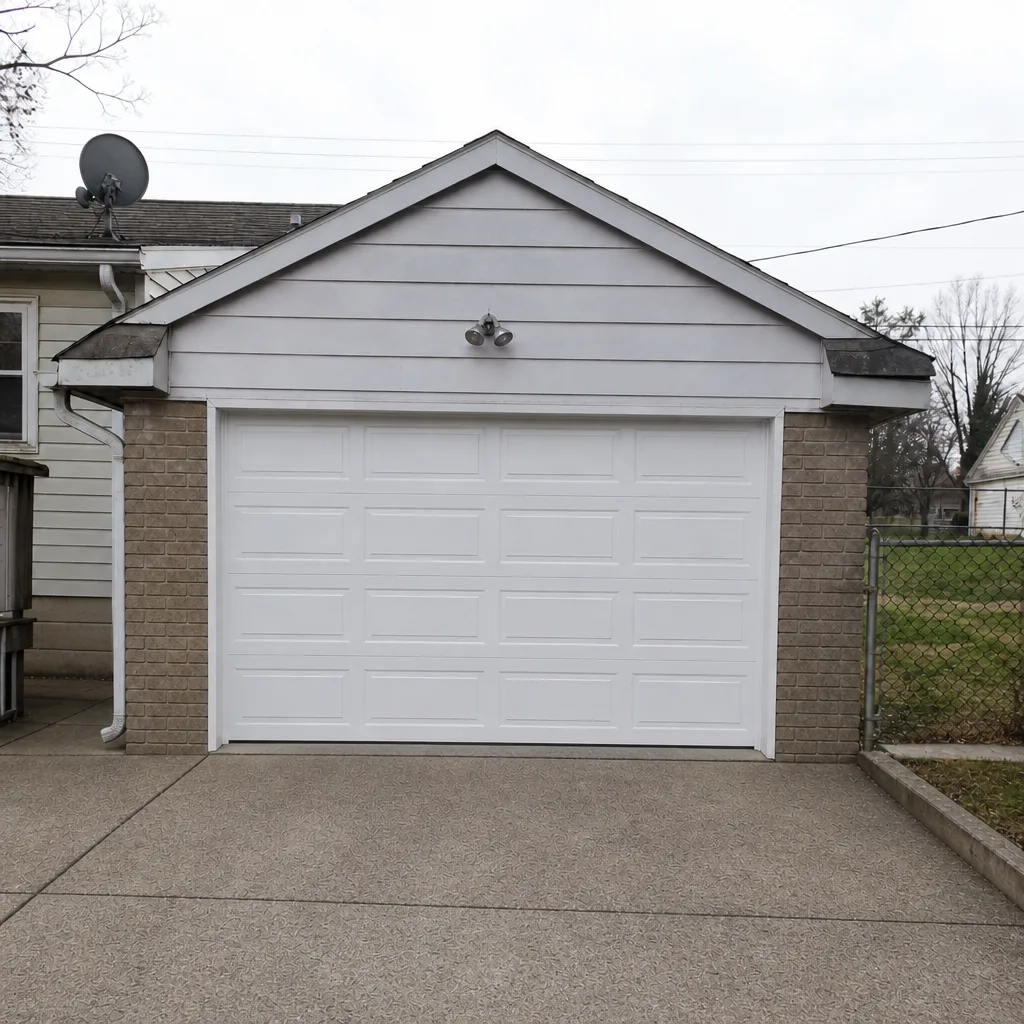 After
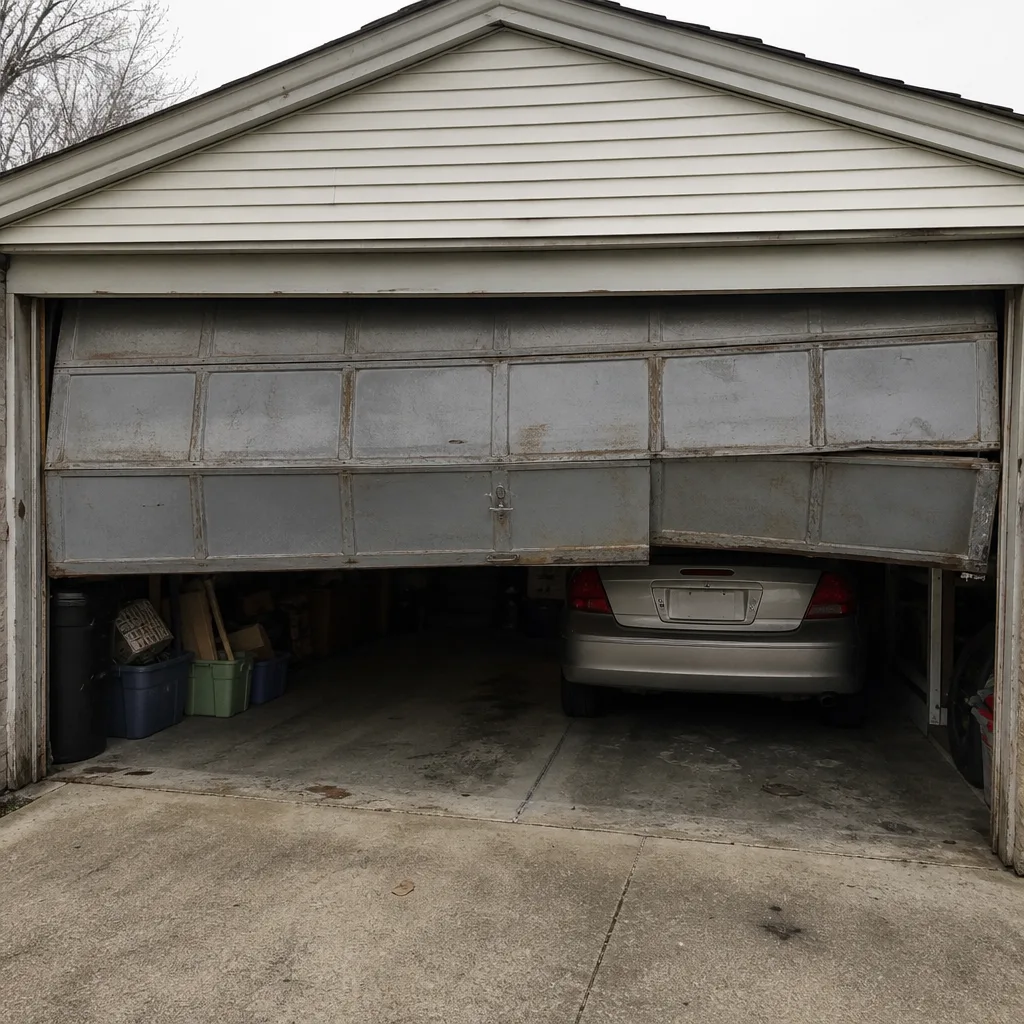 Before
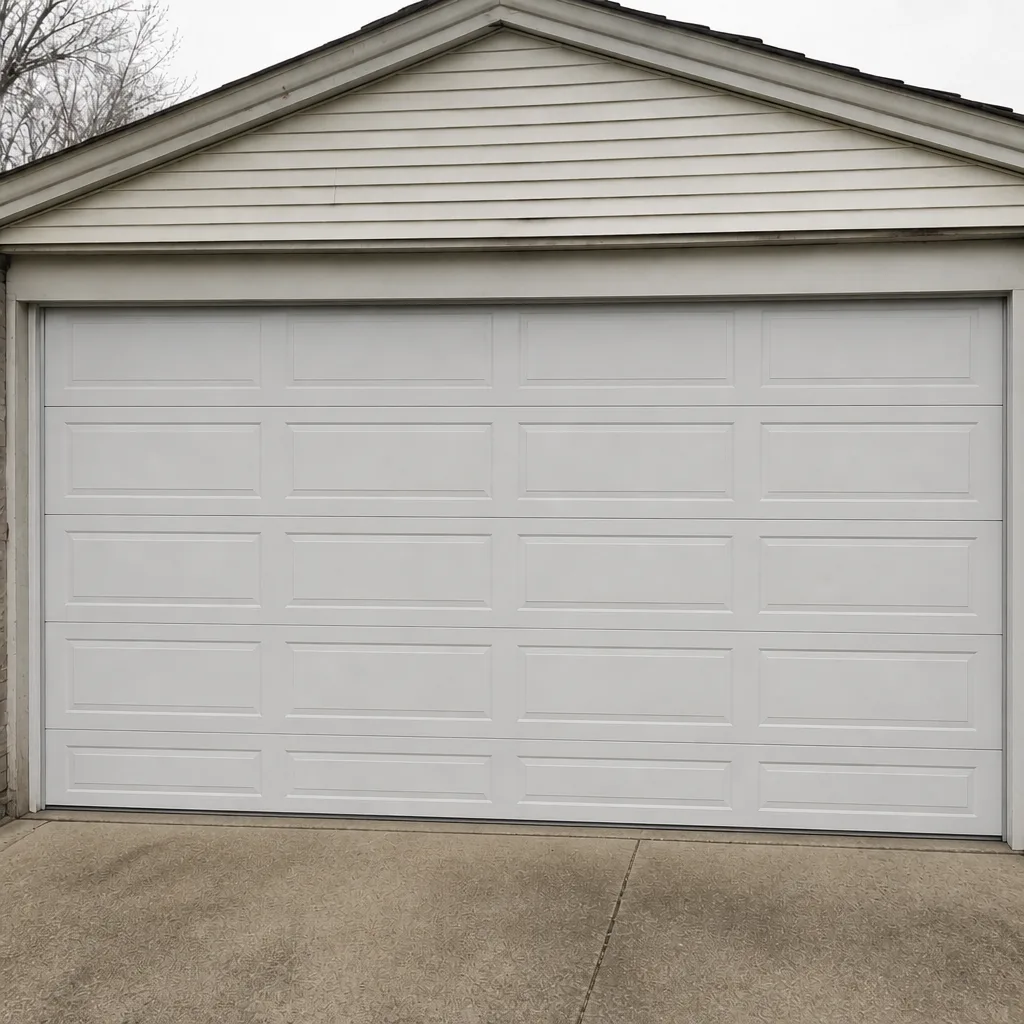 After
When to Call a Professional
Call a technician if the door has snapped a spring, hangs crooked, has a frayed or loose cable, reverses before contact with the floor, or grinds and pops at the same point in its travel. Call if the door is stuck open, if a panel has separated from its hinge, or if the opener is straining at the start of every lift. Those are the situations where continuing to run the door risks a drop or a larger repair. Everything else, from squealing rollers to intermittent rattling, can be scheduled comfortably within two weeks.
Bethlehem Garage Door Repair Pros offers free estimates in Bethlehem. Our technicians have up to 15 years of experience, and the price is quoted and agreed before any work starts, so the written estimate sets what you pay. We handle repair, opener work, spring replacement, and full door replacement under one roof, and we’ll tell you plainly which one your door actually needs. Call (833) 468-5855. We answer 24/7. Fast dispatch from 7am to 7pm, Sunday through Friday. Closed Saturday; a call that comes in on Saturday gets booked into the next opening on Sunday.
Frequently Asked Questions
A slight slowdown in travel time is the warning sign most people miss, because it develops over weeks and never looks dramatic. It’s the earliest reliable indicator that spring tension has drifted, and it’s the point where a repair is cheapest. If your door is a second or two slower than it used to be, call (833) 468-5855 for a free estimate.
Repair costs in Bethlehem vary by the part that failed, so we quote per job rather than publish a fixed number. Spring replacement, cable work, roller and hinge replacement, and opener repairs all price differently, and a matched pair of springs is priced as a pair rather than as one. We give you a written estimate before any work begins, and that written estimate is the price. Call (833) 468-5855 for an exact quote. Estimates are free.
Almost never. Springs, cables, tracks, and openers all show signs before failing, but the signs are easy to dismiss: noise, speed changes, and small alignment shifts. The rare true surprise is a cable that was already frayed without anyone looking. That’s why the visual check matters as much as listening.
It depends on which noise. Squealing is usually just dry rollers and can wait for a scheduled visit. Grinding or popping at the same spot every cycle is a real problem and needs a same-day look. If you’re not sure which you’re hearing, describe it to us and we’ll tell you whether it can wait. Call (833) 468-5855.
The price doesn’t change after work begins. We assess the door, quote the job, and get your agreement before anything is fixed. If we find a second problem while we’re in there, we tell you and quote it separately so you can decide. Call (833) 468-5855 for a free estimate.
The local professionals we connect you with are licensed and insured as their state requires. Our technicians have up to 15 years of experience, and springs, cables, and counterbalance work are handled by specialists rather than generalists. Call (833) 468-5855 to book an estimate.
The Bottom Line
Your garage door warns you before it fails, through sound, speed, and alignment. A door that’s slower than it used to be is telling you the tension has changed. A crooked door is telling you the balance has gone. A grinding track is telling you the alignment has shifted. Learn the difference between a same-day symptom and a scheduled one, baseline your door while it’s healthy, and check it at the turn of each season. That’s the whole method, and it applies to every door in Bethlehem regardless of brand or age. If something doesn’t sound or look right, we’ll take a look. Garage doors are all we do.
Call (833) 468-5855 for a free estimate. We answer 24/7. Fast dispatch from 7am to 7pm, Sunday through Friday, and we’re closed Saturday. Whether your door needs a spring replaced or a full new installation, the price is quoted and agreed before any work starts. If you’d rather not guess at a symptom, call and describe it. We’ll tell you whether it can wait or needs a technician today.
Written by the team at Bethlehem Garage Door Repair Pros.